Proteome remodeling in the zoospore-to-vegetative cell transition of the stramenopile Aurantiochytrium limacinum reveals candidate ectoplasmic network proteins
July 2, 2025· ,,,,,,·
0 min read
Alejandro Gil Gómez
Ben Leyland
Anbarasu Karthikaichamy
Rebecca C. Adikes
David Q. Matus
Joshua S Rest
Jackie L. Collier
Abstract
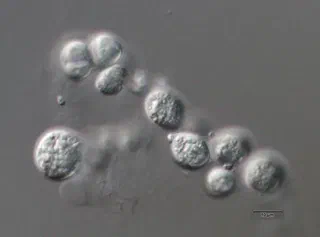
Thraustochytrids are marine protists of ecological and biotechnological importance. We conducted time-course proteomics and microscopy to study the transition from a swimming zoospore to a settled, growing vegetative cell in Aurantiochytrium limacinum, identifying 623 differentially expressed proteins and candidate ectoplasmic network and bothrosome proteins.
Type
Publication
PLOS ONE

Authors
Computational Scientist
Alejandro Gil Gómez, Ph.D., is a Computational Scientist at Stony Brook Medicine and Research Computing focused on clinical and translational research. His expertise spans end-to-end bioinformatics, AI/ML workflows, and high-performance computing (HPC). He specializes in developing scalable, reproducible pipelines for a wide array of data types, including RNA-seq differential expression, genomic variant analysis, proteomics, and spatial omics. Experienced in processing HIPAA-regulated clinical datasets, he bridges advanced computational workflows with practical biomedical discovery. He holds a Ph.D. in Ecology and Evolution from Stony Brook University and has also taught bioinformatics and mentored students in data-intensive research.